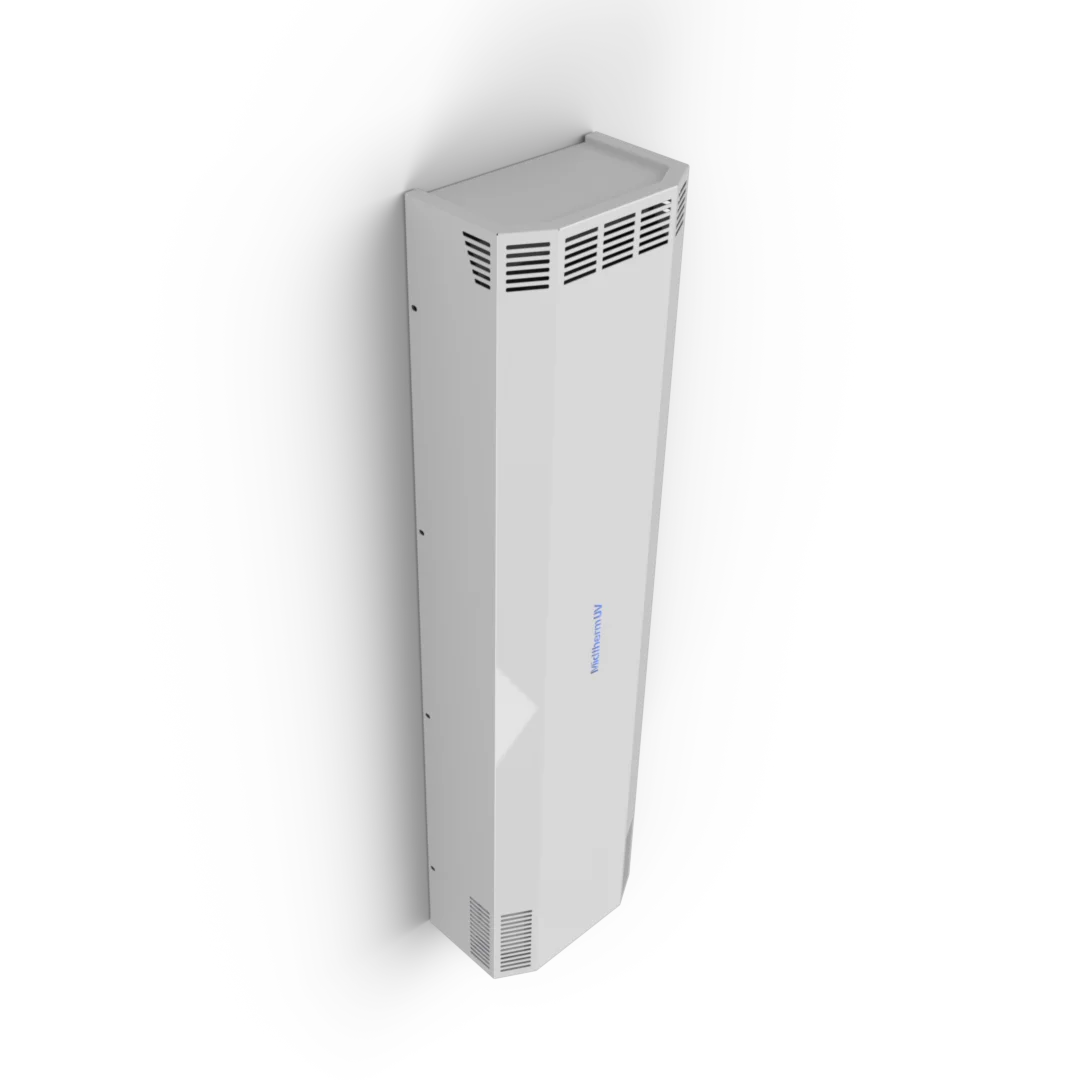
St Teresa's RC Primary School, Merton
Two independent validation studies demonstrate 41-93% reduction in airborne pathogens using MidthermUV air sanitizers in London primary school.
Key Results
Range across two independent validation studies
"Good" air quality classification achieved
Classrooms, main hall, and staff room
Institution of Mechanical Engineers testing
Challenge
St Teresa's RC Primary School needed to create a safer learning environment during the COVID-19 pandemic. With the Omicron wave threatening school operations, rapid deployment of effective air sanitisation was essential to protect students and staff while keeping the school open after the Christmas holiday break.
Solution
MidthermUV MT250 wall-mounted air sanitizers were installed across 6 classrooms, the main hall, and staff room. The units provided continuous air purification throughout the school day and continued running for several hours after students left, further reducing airborne pathogen levels.
Results
Two independent validation studies demonstrated 41-93% reduction in airborne microbes. All tested rooms achieved <500 CFU/m³, classified as "good" air quality by WHO and Hong Kong EPA standards. IMechE member Barry Patterson validated 90% bio-burden reduction.
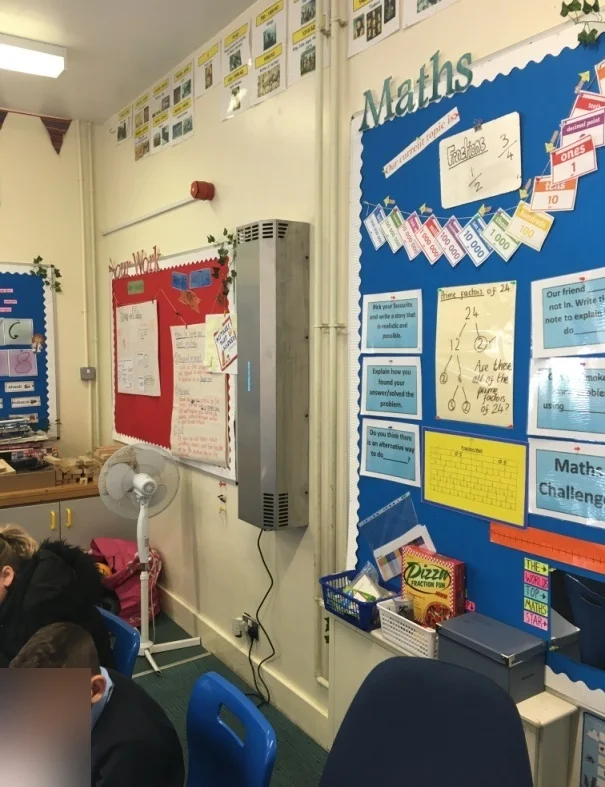
UV-C air sanitiser installed in classroom at St Teresa's RC Primary School
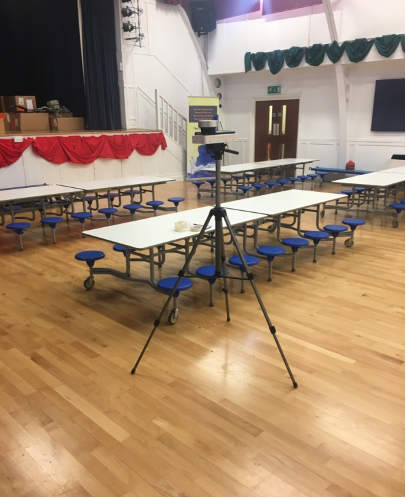
Cantium Scientific MicroBio MB1 air sampler conducting testing in main hall
Study 1: IMechE Validation
Institution of Mechanical Engineers Testing
Barry Patterson, member of the IMechE PICS Committee, conducted on-site testing to validate the effectiveness of the installed air sanitizers.
Testing Methodology
The validation used rigorous air sampling methodology with petri dishes containing nutrient agar gel. Air samples were collected before and after one hour of sanitizer operation, allowing direct visual comparison of airborne pathogen levels.
Testing Process:
- 1."Before" sample: Air sampler drew one cubic meter of air onto petri dish before sanitizer operation
- 2.Sanitizer operation: MT250 units ran for one hour in the classroom
- 3."After" sample: Second air sample collected using identical methodology
- 4.Incubation: Both petri dishes incubated to allow bacterial and mold colony growth
- 5.Visual comparison: Colony counts compared to quantify pathogen reduction
Results
The "before" petri dish showed numerous colonies of bacteria and mold present in the classroom air. The "after" dish demonstrated a 90% reduction in bio-burden, providing clear visual proof of the sanitizers' effectiveness.
Video Documentation
The complete testing process was documented by the Institution of Mechanical Engineers and published on their official YouTube channel, providing transparent third-party validation of the technology's effectiveness.
"My congratulations to the Head and Governing Body at St Teresa's School for being an early adopter of this proven, safe and approved technology."
Study 2: Cantium Scientific Air Sampling
Equipment & Standards
Calibrated Equipment: Cantium Scientific MicroBio MB1 air sampler (Serial #30131130954)
Sample Volume: 1m³ air samples taken over 10-minute sampling periods
Culture Method: Nutrient agar Petri dishes, incubated at 36°C for 48 hours with repeat count at 96 hours
Testing Date: January 13, 2022
Air Quality Classification Standards
Results were evaluated against WHO and Hong Kong EPA standards for indoor air quality in non-industrial spaces:
<500 CFU/m³: "Good" air quality
500-1000 CFU/m³: "Normal" air quality
1000-2000 CFU/m³: "High" air quality concern
>2000 CFU/m³: "Very High" air quality concern
For comparison: Hospital wards require <100 CFU/m³ to be classified as "good"
Key Findings
All rooms tested achieved "good" air quality classification (<500 CFU/m³), significantly below the "normal" range of 500-1000 CFU/m³
Reduction range of 41-87% compared to median "normal" baseline of 750 CFU/m³
Results align with other studies: Harrison College (82-85% reduction) and NHS Hospital (79-82% reduction)
Testing conducted during occupied conditions: Most classrooms were full of pupils, staff room had people coming and going, demonstrating real-world effectiveness
Why This Validation Matters
Third-Party Testing
Validation conducted by IMechE member and calibrated scientific equipment provides independent verification of effectiveness.
Visual Scientific Proof
Petri dish methodology provides clear, visual evidence of pathogen reduction that can be understood by non-technical stakeholders including parents and governors.
Real-World Conditions
Testing conducted in actual occupied primary school classrooms demonstrates effectiveness under real conditions, not just laboratory settings.
Early Adopter Success
St Teresa's leadership demonstrated proactive commitment to student and staff safety by adopting proven technology early in the pandemic response.